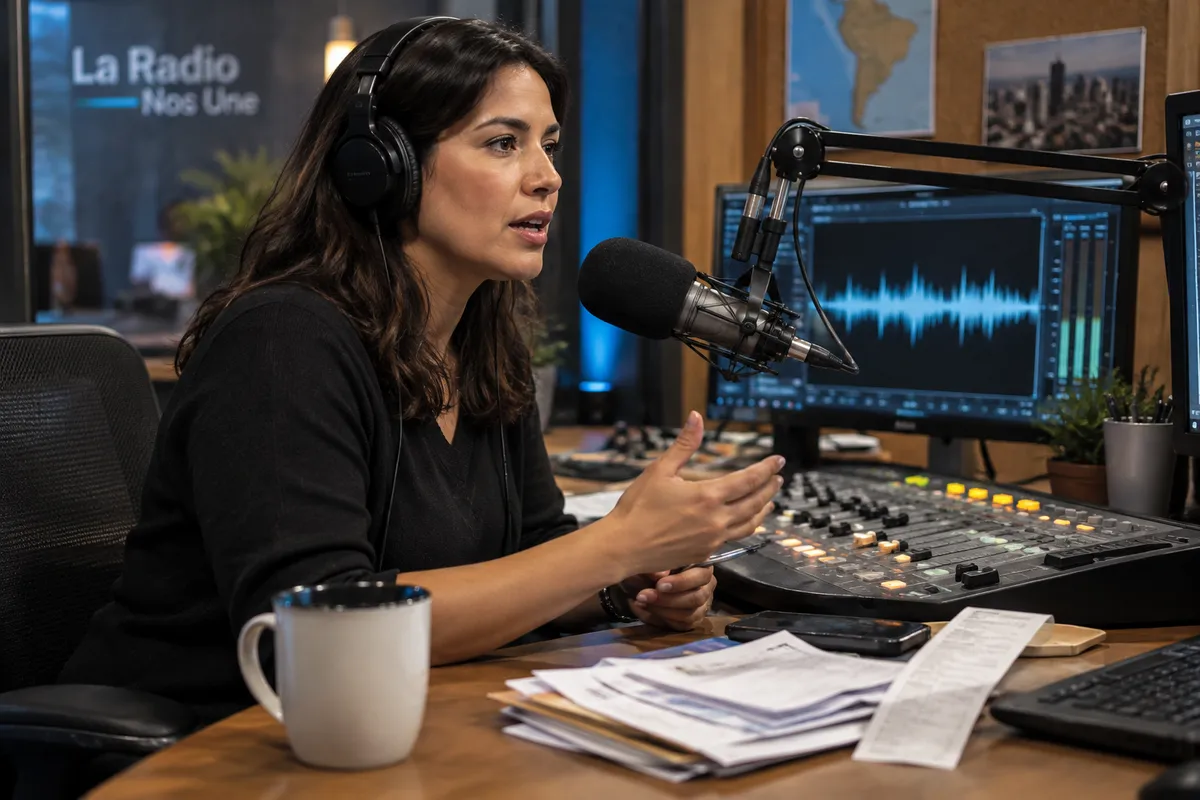
On a Spanish-language radio station in Pennsylvania's Lehigh Valley, the political polling doesn't come from a clipboard. It comes from the phone lines. Victor Martinez, who runs the station in Allentown, told News4jax's source reporting that listeners are calling in with frustration over everyday realities like higher fuel prices and inflation, just ahead of next month's closely contested midterm election.
The story: A Swing District Tunes In
Per the report, Martinez's show has become a place where Latino voters talk about groceries, gas, jobs, childcare and immigration. The setting matters. Pennsylvania's 7th Congressional District is one of the country's most closely watched races, and Latino voters make up roughly a quarter of the district.
The report also frames a political wrinkle. Some of those voters helped Trump win support two years ago, and some now say they feel disappointed that prices remain high and daily life hasn't improved. The article argues that this economic stress could weaken Republican support among Latinos in the district.
That is the outlet's framing, and it's worth holding at arm's length. Frustration on a call-in show is not the same as a ballot cast, and one station is not an electorate.
The Radio Show as a Focus Group With Better Manners
Political reporters love a diner. It's practically a genre: the candid voter, the cup of coffee, the quote that supposedly explains the whole country. Spanish-language radio is a less overused stage, and arguably a more revealing one, because the audience isn't performing for a notebook. They're calling in to talk to their neighbors.
It's hard not to notice what that format captures that a poll can't. A survey asks whether the economy is a top issue. A radio caller says what the gas receipt looked like. Per the report, the topics coming up are exactly that practical: fuel costs, groceries, jobs. The politics arrive through the household budget, not the other way around.
Economic Pain vs. Party Loyalty
The real question the article raises is what frustration turns into. There are a few possibilities, and the report doesn't claim to know which one wins:
- Voters who backed Trump two years ago could switch their support.
- They could stay home.
- They could vote the same way anyway.
The piece leans toward the idea that disappointment could cost Republicans ground. But the gap between "I'm unhappy" and "I'm changing my vote" is where midterm races are won and lost, and a bad mood is notoriously slippery. Disappointment can look like a flip, a shrug or a Tuesday spent at work.
The timing suggests this is why the district draws so much attention. A bloc roughly a quarter of the electorate, in a race this tight, doesn't need to move dramatically to matter.
Why This Voice Counts
There's a smaller story tucked inside the bigger one: a local Spanish-language station functioning as a civic gathering place. In a district where a quarter of voters are Latino, a host like Martinez is arguably doing something campaigns spend millions trying to approximate, which is hearing people out in their own language, on their own schedule, about their own bills.
It's also a reminder that "the Latino vote" is not one monolithic mood. The callers described in the report span concerns from immigration to childcare, and the same economic pressure is producing disappointment in people who made different choices last time. That's the texture a national headline tends to flatten.
The Takeaway
Nobody can say yet whether the frustration on Martinez's airwaves will show up at the polls next month. What the report does show is where to listen. In Allentown, the early read on a battleground doesn't come from a pundit's panel. It comes from the listener on line two, talking about the price of getting to work.