
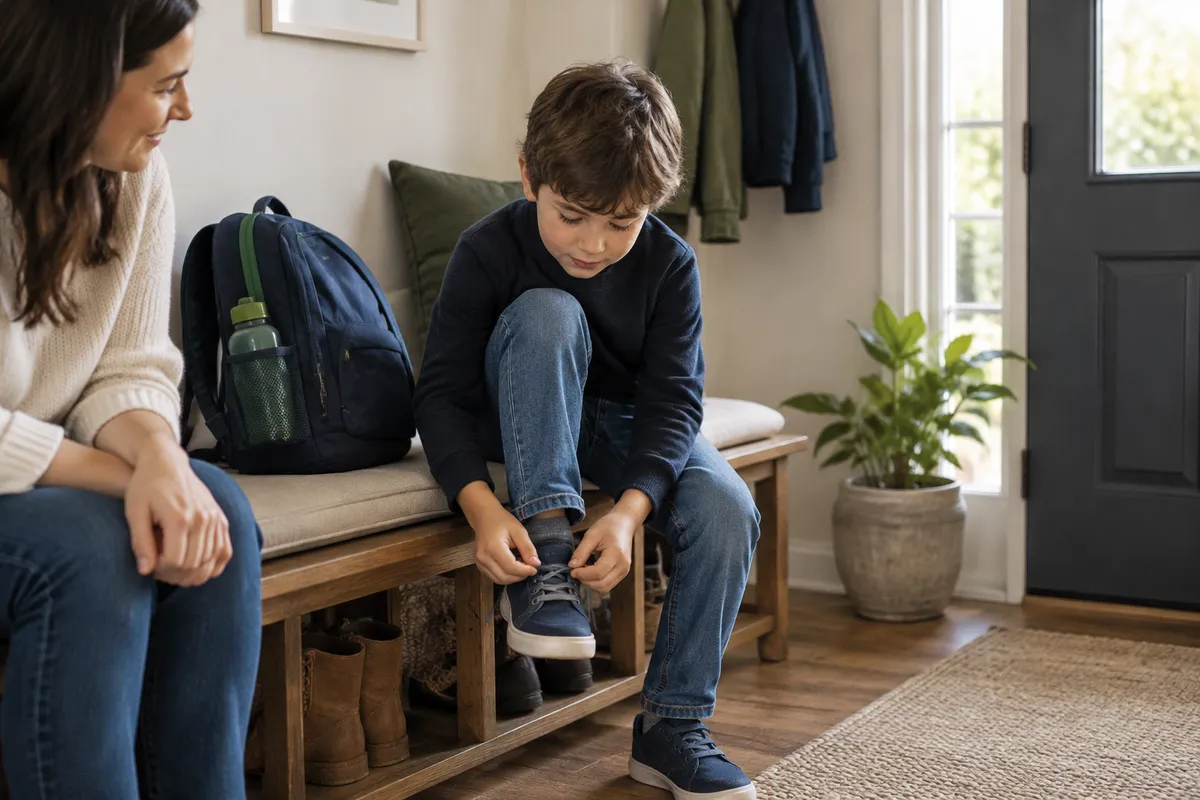
A new piece from Indiatimes, picked up by ParentingNews, makes a case that will sting a little for anyone who has ever zipped a backpack for a child fully capable of zipping it: parents who constantly rescue kids from small struggles may be weakening their confidence, patience, independence and problem-solving skills.
The examples are deliberately ordinary. Packing tiffins. Tying shoelaces. Fixing friendships. Avoiding mistakes. According to the report, experts warn that when parents do too much, children can lose out on the very skills those small struggles were meant to teach.
The Case Against Doing It For Them
The article's core argument is that rescuing, however loving, can quietly rob kids of practice. Per Indiatimes, experts urge parents to support, scaffold, and then step back, so children can learn through what the piece calls "desirable difficulty" and the messy middle.
That last phrase is the good one. The messy middle is the stretch between "I can't do this" and "oh, I did it," and it is, awkwardly, the part most of us are wired to interrupt. Watching a child struggle with a shoelace for four minutes feels like a very long four minutes. It's hard not to wonder how many of us are rescuing the kid and how many are rescuing ourselves from the discomfort of watching.
Why This Is Landing Now
The report ties the advice to a current parenting anxiety: the rise of what it calls "snowplough parenting," in which a parent clears every obstacle from the path ahead before the child ever reaches it. Add pressure around performance, productivity and perfection, and the article says many children are growing up with fewer everyday life skills and lower frustration tolerance.
The snowplough image is doing real work. A plough doesn't walk beside anyone. It goes first, and the road looks lovely, right up until the child has to drive it alone.
Helping, Rescuing, Neglecting
Here's the part worth underlining: nobody in this piece is arguing that parents should vanish. The question it raises is how to raise capable kids without abandoning them. The sequence experts describe is support, scaffold, step back. That is not the same as "you're on your own, good luck with the shoelaces."
A useful way to read it (this is our interpretation, not a quote from the report) is as three different postures:
- Helping: you offer a hand, a hint, a routine, and the child still does the work.
- Rescuing: you take over the task because it's faster, tidier, or less painful to watch.
- Neglecting: you disappear, and the child has no scaffolding at all.
The article's advice lives squarely in the first one, with a deliberate step backward at the end.
What Stepping Back Might Look Like
The report's examples point to a few everyday arenas where parents tend to take over: bags and lunches, shoelaces, and the delicate politics of friendships. A few ways to apply the idea there, offered as our suggestions rather than the experts' words:
At home
Swap "let me do it" for a routine the child owns. A simple checklist by the door lets a kid pack their own bag while a parent stays nearby as backup, not as the packer. Forgetting something once and noticing the consequence is, in the logic of the article, part of the curriculum.
With shoelaces and other small skills
Show once, then wait. The wobbly bow is the lesson, not a flaw in it.
With friendships
Instead of ringing the other family or scripting the apology, try asking the child what they think they could do next. It's slower. It's also the only version in which the child is the one learning how to repair a friendship.
The Pop-Culture Footnote
Fans of a certain kind of movie will recognize the arc. Nobody roots for the hero whose mentor handles every obstacle off-screen. The mentor gives the training montage, the hard-won advice, and then, crucially, leaves the room before the final scene. Parenting, per this piece, works about the same way: be the montage, not the stunt double.
The Takeaway
Indiatimes' message is less "do less" than "do it differently": support first, scaffold next, then step back and let the messy middle happen. The discomfort of watching a child fumble is real, and it is also, if the experts are right, the price of raising someone who eventually doesn't need you to tie the laces. The goal was never a child who never trips. It's one who knows what to do after.