Sometimes the best historical record isn't a chronicle or a ledger. It's a molar. Archaeologists have used lead traces in the tooth enamel of people buried in central England to pin down when lead mining and smelting revived in the Derbyshire Peak District: the mid-7th century. The study, published in the journal Antiquity, was reported by Popular Science.
The finding does more than fix a date. It suggests that for the families living around those mines, the cost of the industry was written into their bodies from childhood.
Why Teeth, of All Things?
The researchers had a problem. According to Popular Science, from the 16th to the 19th centuries manufacturers kept re-smelting lead waste from ancient Rome and medieval England, which wiped out any clear way to examine where that metal came from or how it was used. The paper trail, in other words, had been melted down.
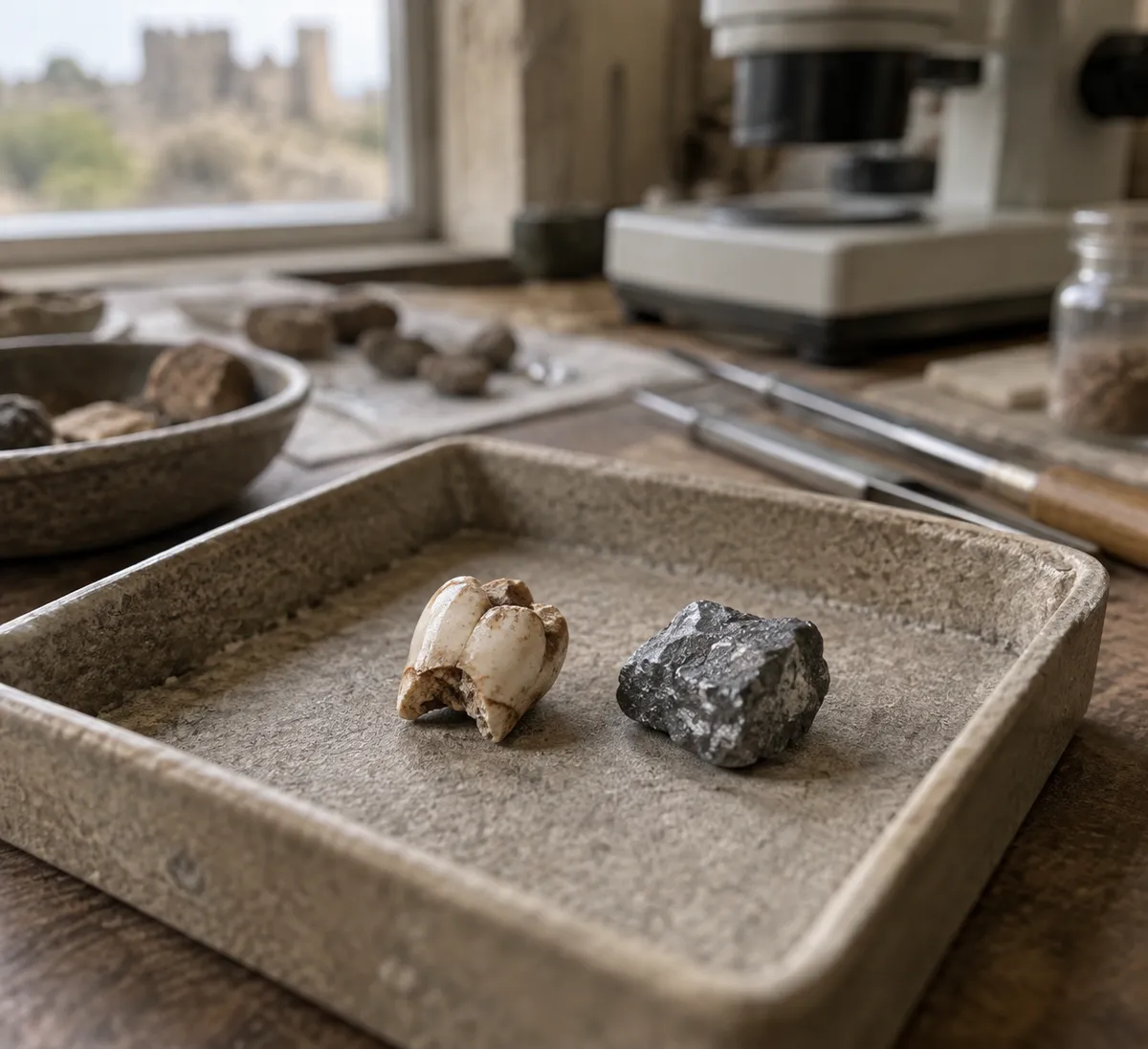
So the team, which includes the University of Nottingham's Christopher Loveluck, turned to the people themselves. They analyzed teeth from bodies buried in three Peak District cemeteries, dating from between 650 and 1500 CE, focusing on enamel. That outer protective layer finishes forming in childhood, so any lead exposure from those years stays locked in for life.
It's hard not to admire the elegance of it: a tooth is a tiny, durable diary of someone's first years, and it can't be re-smelted.
"The team is delighted to have finally confirmed definitively the date by which the early medieval lead industry was established in the Peak District…through evidence provided by the people themselves," Loveluck said in the study's accompanying announcement.
Seventh-Century Kids, Industrial-Era Numbers
Here is the headline result. By the 7th century, the researchers found, children in Derbyshire had lead levels equal to, if not higher than, those of children in industrialized cities during the mid-18th and 19th centuries. That's a comparison worth sitting with: a post-Roman rural community registering exposure on par with the era of soot-darkened factory towns.
By the mid-8th century, the growing industry had begun to seep into surrounding areas such as Castleton, per the report. Exposure peaked in the late 12th and early 13th centuries, which the team says lines up with earlier historical and environmental data.
The Peak District, as Popular Science notes, was one of Europe's largest lead providers during the Middle Ages. So this isn't a side story. It's a look at the engine room of a major medieval industry.
Class Shaped the Dose
Lead was everywhere in these communities, but not evenly. According to the report, high-status graves held weapons and other personal items, and those graves showed lower lead concentrations than the graves of poorer residents. The researchers read this as suggesting that the upper class did own lead-containing possessions, but better-quality ones.
Meanwhile, working-class families employed in mines and factories routinely exposed their children to larger amounts of lead, per the study's findings as summarized by Popular Science.
That pattern will sound familiar to anyone who follows modern environmental justice debates. Our read: the medieval Peak District looks like an early case of a story we still tell, where those who do the hazardous work and live closest to it carry the heaviest load.
The Hardest Detail: Young Women
The study also points to women being especially at risk. Three women who died between ages 17 and 25 had particularly high lead quantities in their enamel. Overall, most of the men survived into middle or old age, while women often died in young adulthood.
Castleton excavation co-director and study co-author Anna Bloxam was careful in how she put it. "Our results indicate that in these mining communities, girls and boys alike were raised in dangerously polluted home environments," she said. This exposure, she added, "perhaps contributed to higher rates of premature death among women of child-bearing age."
Note the "perhaps." The data show a pattern, and the researchers frame the link to early death as a possibility rather than a proven cause. That's the honest reading, and it's still sobering.
What the Past Is Telling Us
Popular Science notes that humanity's relationship with lead stretches back more than 9,000 years, and that the metal was central to prehistoric smelting advances and to technological progress right through the Industrial Revolution. Its uses are now dwindling because lead is known to cause developmental problems, but tracing our reliance on it helps explain a society's historical arc.
Lead contamination remains a serious issue today, though conditions have improved greatly since medieval England, per the report. Still, the underlying problems of environmental degradation and socio-economic vulnerability haven't gone away.
University of Sheffield historian and co-author Colin Merrony said the study lets researchers, for the first time, "look more deeply into the profound impact lead production had on individuals and the communities they lived in."
The Takeaway
We tend to picture pollution as a modern invention, something with smokestacks and regulators. These teeth say otherwise: a seventh-century village could be poisoned by its own livelihood, and the bill landed hardest on the poor and the young. The medieval Peak District didn't leave behind a pollution report. It left something harder to argue with: the children's teeth.