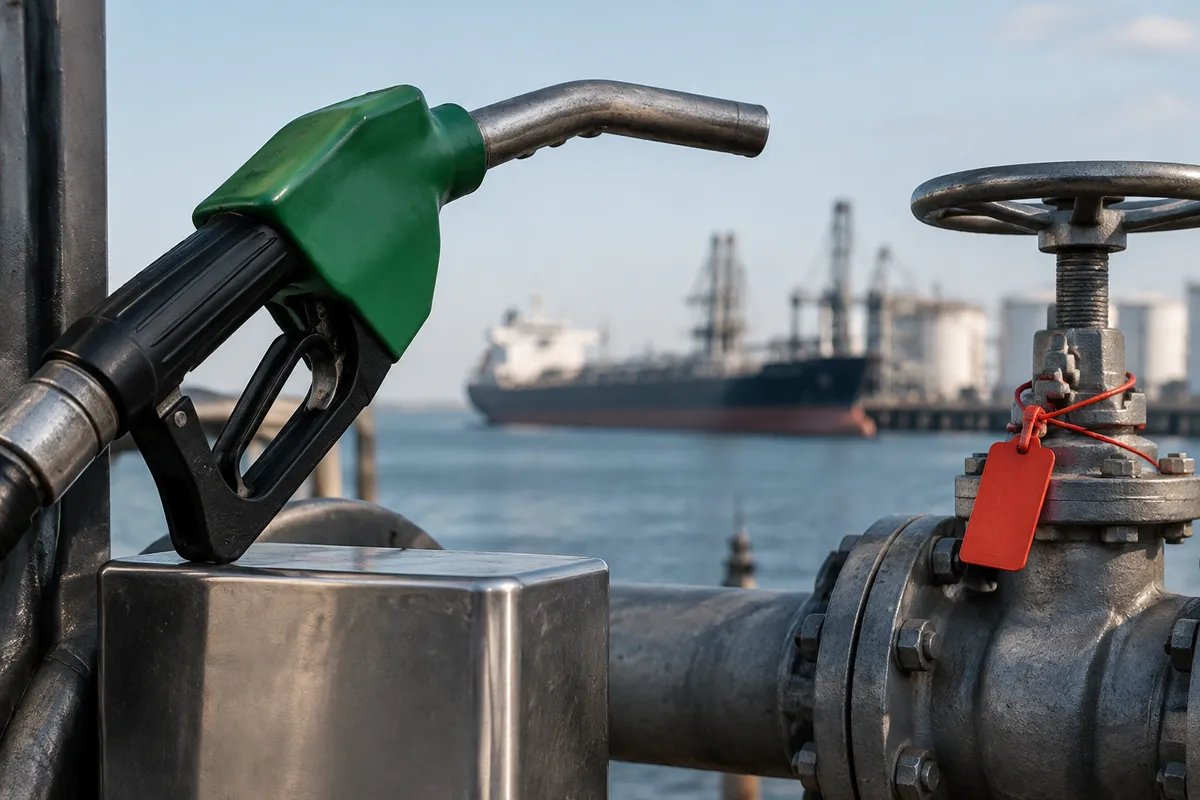
President Donald Trump is facing growing backlash over a plan to import large quantities of Russian diesel to ease soaring US fuel prices during the Iran war, per the BBC. Both Republican and Democratic lawmakers have criticised the deal, which was announced weeks before the US midterm elections.
Critics argue the arrangement undercuts sanctions law and hands Vladimir Putin a financial boost while Russia continues its war in Ukraine.
That is the news. The more interesting question is the one the story quietly hands us: when fuel gets expensive enough, which principle bends first?
The Collision at the Pump
The plan puts two ideas on a head-on course. One is cheap-fuel politics: diesel prices are a major pressure point heading into the midterms, particularly for farmers, truckers, and rural states, according to the BBC's reporting. The other is the sanctions regime built around Russia since the invasion of Ukraine, which relies on the premise that Moscow's energy revenue is something to squeeze, not supplement.
The backlash is notable partly for who is delivering it. Criticism has come from both parties, per the BBC. In a polarized Washington, agreeing that something is a bad idea is practically a rare-species sighting.
Why Diesel, Why Now
Diesel is not a glamorous fuel, but it is the one that quietly runs the economy. Tractors, freight trucks, and the long hauls between farm and grocery shelf all depend on it. That is why farmers and truckers sit at the center of this debate. When their costs jump, the effects ripple outward, and they tend to live in the states and districts where midterm margins matter.
It is hard not to read the timing as political. A deal announced weeks before voters go to the polls, aimed at a fuel that hits rural wallets hardest, looks like an effort to address a pressure point before it becomes a ballot-box problem. That is our reading, not a claim about anyone's motives, and the reported facts here are only the timing and the stated goal of easing prices.
The Sanctions Question
Critics argue the deal undercuts sanctions law. The reporting frames this as an allegation from the plan's opponents, and the details of any legal analysis are beyond what we can verify here. What we can say is the shape of the argument: if US policy is to pressure Russia economically over Ukraine, buying a major Russian export in bulk sits awkwardly beside it.
The optics are the sharper problem. Sanctions only work if they are applied consistently. A carve-out, even a well-intentioned one, invites the obvious question of what other exceptions might follow when prices spike elsewhere.
Would It Even Work?
Here is the part that deserves the most scrutiny. The political case for the deal rests on the idea that Russian diesel would meaningfully lower prices. Whether it actually would is an open question in the coverage we have, and nothing in the BBC's reported summary establishes the scale of any price relief.
That gap matters. If the savings are modest, the deal risks being all political and legal firestorm with little pump-side payoff. If the savings are large, the argument becomes a harder trade-off, and critics would have to explain why higher prices for farmers and truckers are an acceptable cost of sanctions consistency. Either way, voters deserve numbers, not slogans.
The Bigger Picture
The plan lands amid heightened scrutiny of US foreign policy, energy security, and sanctions enforcement, all colliding with an ongoing war involving Iran. Energy security was supposed to be the lesson of the last few years: depend less on adversaries for the thing that keeps your economy moving. Importing from one of them to solve a price spike is, at minimum, an uncomfortable echo of the problem.
Supporters of the move, should they step forward, will likely argue that families and farms cannot wait for ideal policy. That is a real concern, and nobody filling a truck's tank is thinking about the sanctions architecture.
The Takeaway
The fight over Russian diesel is a fight about what a country is willing to pay for its principles, and who gets handed the bill. Right now, bipartisan critics are saying the price of this shortcut may be higher than it looks. Whether it lowers the number on the pump before November is the question that will decide whether the gamble reads as pragmatism or as a very expensive political miscalculation.