
Physicists have spent decades hunting dark matter, the invisible stuff thought to make up roughly 85% of all matter in the universe. Now a new line of research, reported by Phys, points at an unexpected hero: the material the detector is made of.
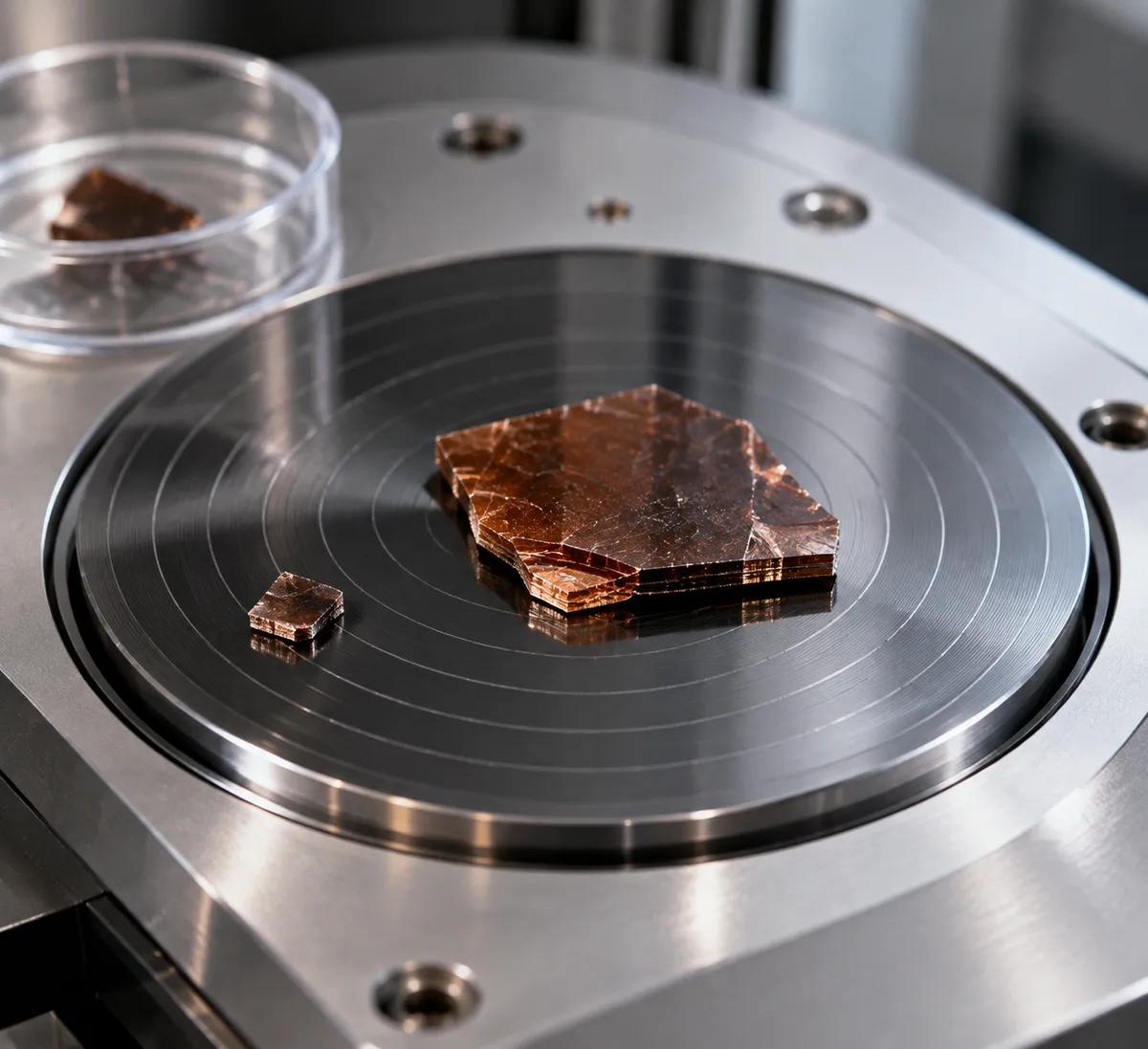
The work centers on three quantum materials: TiSe₂ (titanium diselenide), Sr₂RuO₄, and hole-doped diamond. Per Phys, these could become ultra-sensitive detectors for light dark matter by amplifying tiny energy signals through low-energy plasmons. The main finding, as reported, is that they may outperform current detector designs by orders of magnitude, with titanium diselenide showing especially strong potential.
The Problem: A Whisper in a Very Large Room
Dark matter's gravitational influence shapes galaxies and the wider universe, but catching it in a lab is another story. Per Phys, traditional detection methods have struggled to capture the extremely weak interactions expected from lighter dark matter candidates.
Think of it as trying to hear a single footstep in a stadium. The footstep may be real, but your microphone has to be exquisitely tuned to notice it. That's the pivot here: instead of only dreaming up new particle theories, researchers are rethinking the microphone.
The Plot Twist: Crystals as Amplifiers
The key idea, according to Phys, is that these quantum materials host low-energy plasmons, which can amplify the tiny energy signals a passing dark matter particle might leave behind. A weak nudge becomes something a detector can actually register.
It's hard not to enjoy the shift in casting. For years, the leading roles in dark matter stories went to hypothetical particles. Here the supporting cast, a slab of crystal, steals scenes. The piece's broader message, per Phys, is that detector design may now matter as much as particle theory.
Titanium Diselenide Gets the Spotlight
Of the three candidates, titanium diselenide is the standout in the reported findings. The other two are no slouches in the lineup: Sr₂RuO₄ is a quantum material in its own right, and hole-doped diamond adds a gemstone twist to the story, though we'll resist any jokes about dark matter being a girl's, or a physicist's, best friend.
What we can say, based on Phys's reporting, is that these materials are moving from lab curiosities to tools for answering cosmic questions. A material that once interested specialists in condensed matter physics may now earn a place in the search for what the universe is mostly made of.
Why This Matters Beyond the Lab
The wider takeaway is a quiet one, and it's the kind of discovery this site loves: progress on a giant cosmic mystery may come from a very small, very down-to-earth place. Not a bigger telescope or a stranger particle, but a better crystal.
No detector has been announced here, and the findings describe potential rather than a confirmed detection. Still, the idea that particle physics now needs materials science as a partner is a genuinely fresh perspective on an old hunt. If dark matter is out there whispering, the next listening device may be grown, not built from a theory.
The universe has kept its biggest secret for a long time. It may turn out the way to crack it was sitting in a materials lab all along.