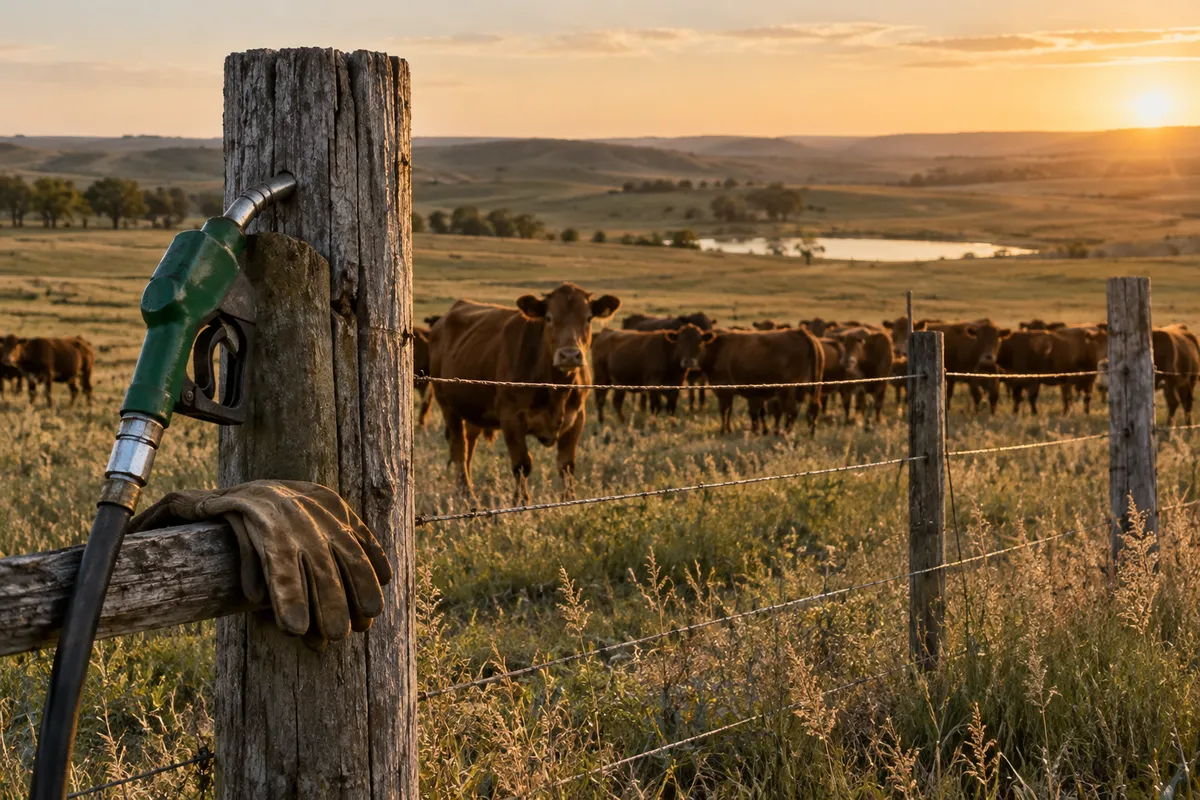
Nebraska ranchers are being squeezed from several directions at once, and with the midterm elections weeks away, that pressure is reaching the ballot box conversation. That's the picture painted in a BBC report on farmers and ranchers in states that backed President Donald Trump, many of whom say they are being hit from all sides.
Per the BBC, the list of pressures includes wildfire damage, diesel price spikes, tariffs, and the president's policy on importing foreign beef. Together, they are testing political loyalty in a deeply pro-Trump agricultural state.
The Stack of Bills Behind the Beef
It's easy to think of ranching as one big bet on cattle prices. The BBC's reporting suggests it is more like a pile of separate bets, all going wrong at the same moment.
Wildfire damage is the kind of problem no market can fix. Diesel spikes hit anyone who runs equipment and hauls anything. Tariffs, which are supposed to protect American producers, also touch the costs of what those producers have to buy. And then there is the foreign beef import policy, which lands differently on a ranch than it might in a Washington briefing room.
The BBC's framing is that these pressures collide with election-season politics, with beef prices, farm costs and rural economic pain all in play.
The Awkward Math of "Buy American"
Here is where the story gets its bite, and where my read comes in. "Buy American" is a slogan with obvious appeal in cattle country. It's hard not to see the tension when a policy on importing foreign beef arrives in a state whose ranchers sell American beef for a living.
The BBC describes a broader split that many political watchers will recognize: voters who support Trump's cultural agenda but feel harmed by parts of his economic policy. That's not a contradiction so much as a two-column ledger. One column holds identity, values and trust. The other holds diesel receipts and fencing costs. Ranchers, as the report depicts them, are reading both columns at once.
Loyalty Under Load
The interesting question isn't whether a rancher is angry about a bill. It's what anger does to a long-standing partisan habit. Economic pain can reshape how people vote without breaking their sense of who they are politically. A voter can be frustrated and still not defect, or can defect on one race while staying put on another.
That's the lens the BBC story offers: not a revolt, but a strain test. Family operations run on thin margins and long market cycles, and when several costs jump together, there's little cushion left to absorb a policy they didn't ask for.
A Senate Race Nobody Expected to Watch
The timing adds spice. Per the BBC, Nebraska's Senate race is surprisingly competitive, which is not a phrase typically attached to a state this firmly in Trump's column. Whether ranch-country frustration is driving that closeness is not something the report establishes, and it would be a stretch to claim it. But it's hard not to wonder what a race looks like when a core constituency is publicly doing the math on its own costs.
That is why this story travels beyond one state. Beef prices touch grocery carts everywhere, and rural economic pain is a recurring character in every election cycle. Nebraska just happens to be where several of those storylines meet in one pasture.
The Takeaway
Political loyalty is often treated like a switch. The ranchers in the BBC's reporting suggest it's more of a dial, and right now a lot of hands are on it. A slogan about buying American can survive a lot, but it has to compete with the price of diesel and the cost of rebuilding after a fire. Come November, the open question is whether people who still like the message will keep giving the economics a pass.