
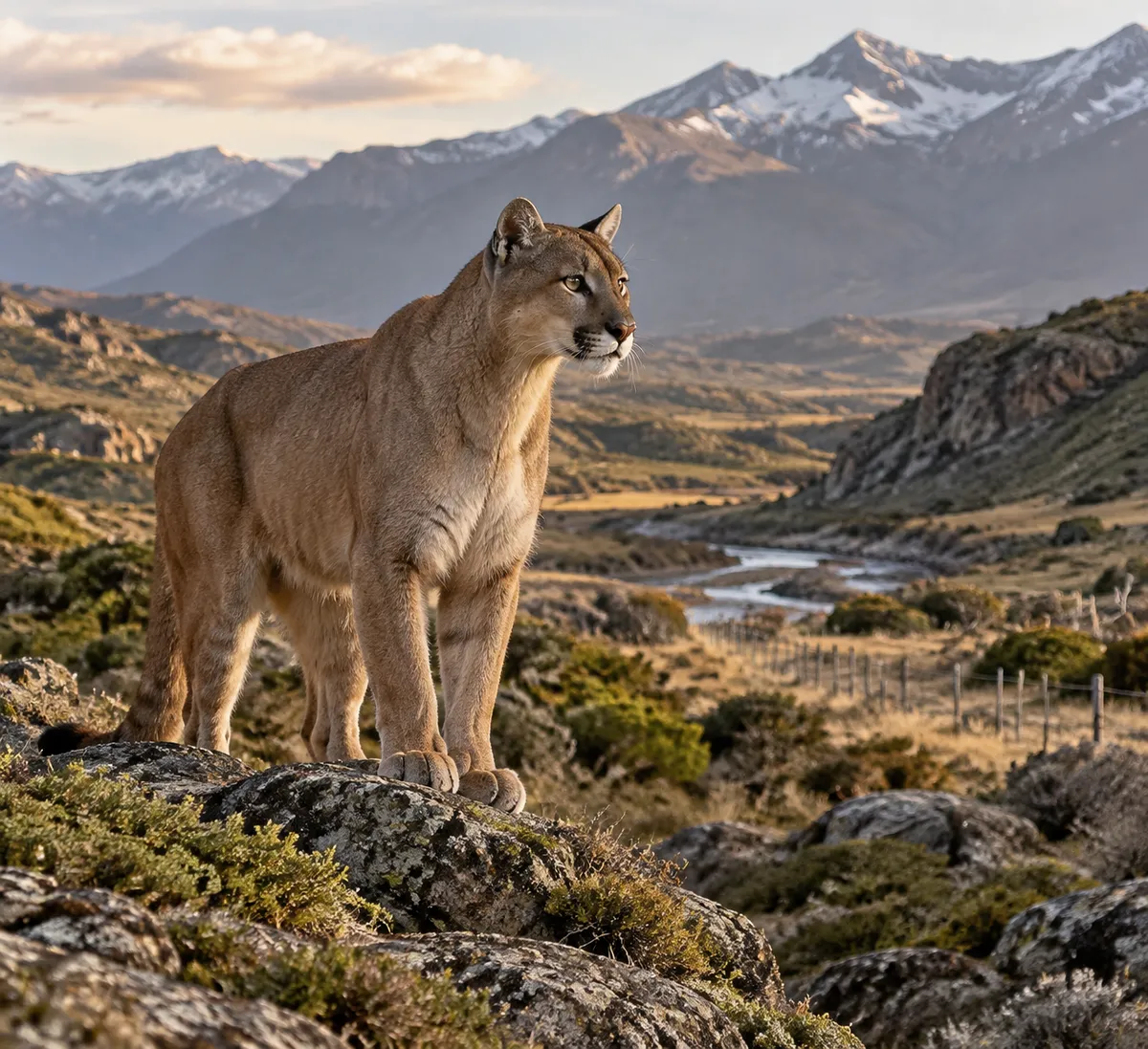
Dior Sauvage, one of the best-known men's fragrances on the shelf, has teamed up with the World Wildlife Fund to protect wild pumas in Chile and across the Americas, per Elle. The partnership is a three-year commitment, and Elle's report follows a trip to Patagonia to see the work firsthand and, with some luck, glimpse the big cats themselves.
According to Elle's account, the plan has three main parts: habitat connectivity projects, education initiatives meant to reduce conflict between people and wildlife, and advanced tracking technology to monitor puma populations.
Why a Perfume Brand Is Talking About Cats
It's hard not to notice that a fragrance named Sauvage, French for "wild," has gone looking for something wild to protect. The pairing has a certain poetry to it. Pumas are elusive, solitary and famously hard to spot, which is more or less the mood a cologne ad spends millions trying to bottle.
But the more interesting question isn't whether the branding fits. It's whether the work does. Luxury houses are increasingly expected to back up sustainability talk with something more than a tasteful campaign, and the details here are where this partnership either earns its keep or doesn't.
The Fine Print Is the Point
Three things set this apart from a typical logo-on-a-charity-page arrangement, at least on paper.
It has a timeline. A three-year commitment gives the work room to produce results, rather than a one-season splash. That's a meaningful difference from a limited-edition bottle with a donation attached.
It has specific tools. Per Elle, the project involves tracking technology to monitor pumas, and the coverage points to practical measures such as GPS collars, habitat bridges and rancher education. Those are things you can check on later, which is the opposite of a vague pledge about "caring for nature."
It names a real status. Pumas are listed as near-threatened in Chile, which gives the urgency a factual footing. This is not a symbolic cause chosen because it looks good on a poster.
The Unglamorous Part: Ranchers and Guard Dogs
The most useful piece of conservation work tends to be the least cinematic. Habitat connectivity matters because pumas need room to move. Education matters because conflict between big cats and people who raise livestock is where animals often lose.
The practical fixes mentioned alongside the partnership are refreshingly down to earth: specially trained guard dogs and stronger fencing. No one is going to put a guard dog on a billboard next to a glossy bottle, which is a small point in its favor. If a program is built around fences and dogs, it is at least aimed at a real problem.
Why Protecting One Cat Helps Hundreds of Species
The conservation logic here rests on what's often called an umbrella species. The idea is that when you protect an apex predator and the land it needs, you safeguard a wide range of other species living in the same ecosystem. A puma doesn't just need a meal. It needs a functioning landscape, and keeping that landscape intact benefits everything else in it.
That's the strongest argument for the partnership's focus. Money spent on one charismatic cat is, in theory, money spent on an entire neighborhood of wildlife that would never get its own ad campaign.
The Skeptic's Checklist
A fair reader should still ask hard questions, and the partnership invites them. Does the funding scale with the fragrance's sales or stay fixed? Will results be reported publicly? What counts as success after three years: more connected habitat, fewer conflicts, healthier puma numbers? The coverage describes the commitments, but those answers are what will separate a genuine conservation effort from a very elegant press trip.
That's not cynicism so much as the standard luxury now has to meet. When a brand sells itself on being untamed, people reasonably want to know what it's actually doing for the things that are.
The Takeaway
There's a decent chance most people will never see a wild puma in Patagonia, and that's rather the point of the animal. What a bestselling cologne can do is pay for the fencing, the collars and the conversations with ranchers that let the cats stay unseen and unbothered. If Sauvage's name ends up attached to a puma that keeps roaming where it always has, the best scent in the story will turn out to be the one nobody can bottle.