
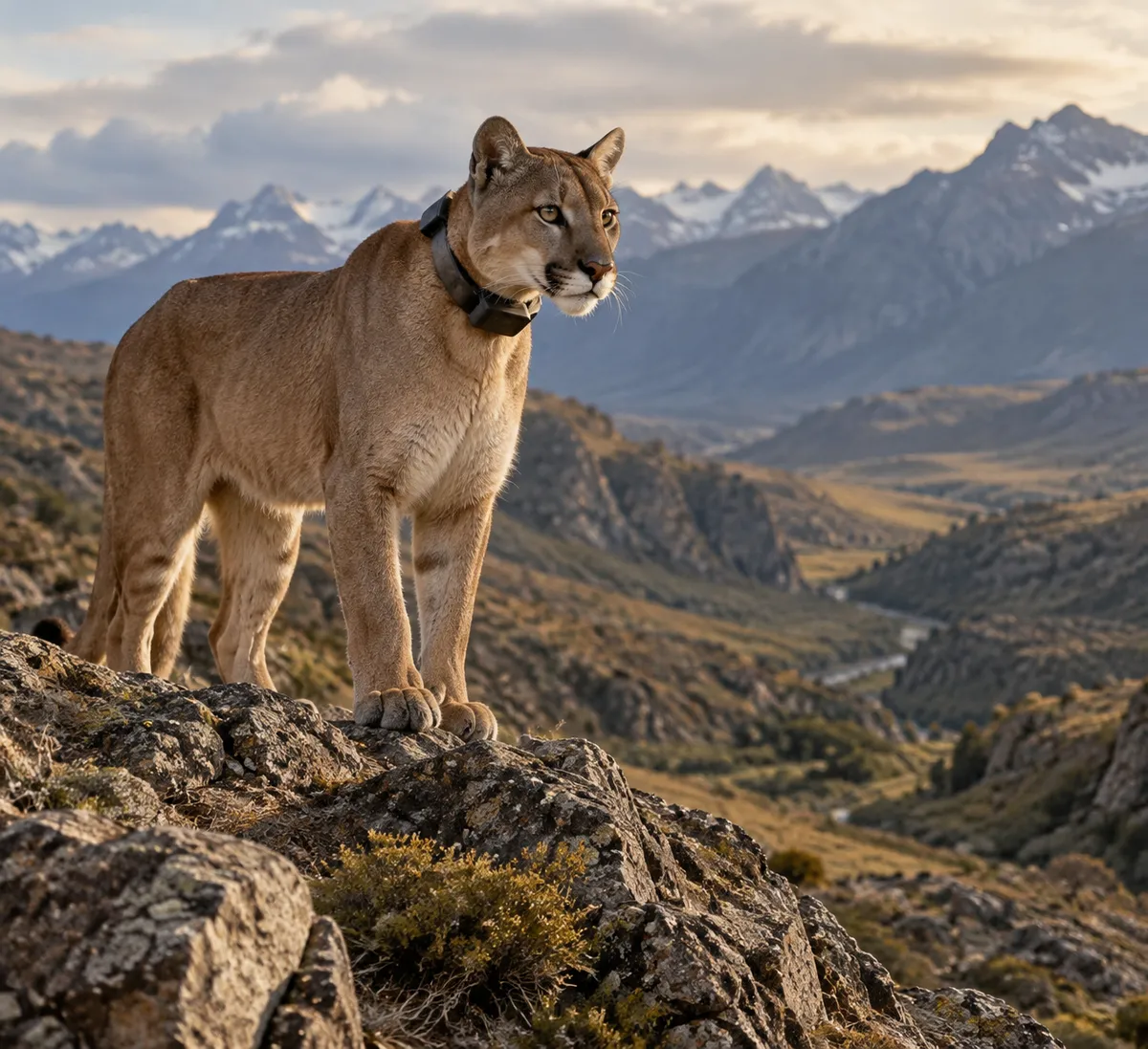
Dior's Sauvage fragrance has teamed up with the World Wildlife Fund to protect wild pumas in Chile and across the Americas, according to Elle, which traveled to Patagonia to see the work firsthand and catch a glimpse of the big cats. The partnership is a three-year commitment covering habitat connectivity projects, education initiatives meant to reduce human-wildlife conflict, and advanced tracking technology to monitor puma populations.
A cologne named Sauvage, French for "wild," funding the protection of an actual wild animal is, let's be honest, the kind of brand alignment that practically writes its own tagline. The more interesting question is whether the details hold up. Going by what Elle reports, there's more substance here than a logo on a bottle.
Why the Timing Matters
Pumas are listed as near-threatened in Chile, per Elle's reporting, which gives the work a real urgency. Luxury brands are also under growing pressure to back up sustainability talk with action rather than surface-level partnerships. A fragrance house betting on a specific animal, in a specific place, over a defined stretch of time is at least a different shape of promise than the usual vague pledge to "care about the planet."
That's my read, not a verdict. But a three-year timeline is something you can check back on, and that's a useful feature in a world of eternal "commitments."
What the Money Is Meant to Do
The partnership's pieces, as described in Elle's coverage, fall into three buckets.
Habitat connectivity
Pumas need room to roam, and the projects here focus on connecting habitat so the cats can move through the landscape. Coverage points to habitat bridges as part of that effort.
Tracking technology
Monitoring puma populations relies on advanced tracking tech, including GPS collars. It's the unglamorous backbone of conservation: you can't protect an animal very well if you don't know where it goes.
Living alongside ranchers
Then there's the human side. Education initiatives aim to reduce conflict between people and wildlife, and the practical fixes mentioned include specially trained guard dogs and stronger fencing. This is arguably the most compelling part. Nobody's rescuing a puma by lecturing a rancher; you rescue it by making coexistence the easier option for everyone involved.
The "Umbrella Species" Idea
Here's the conservation concept worth knowing. Apex predators like pumas are often described as umbrella species: protect the one animal and its range, and you safeguard hundreds of other species sharing that ecosystem. Think of the puma as the headline act whose ticket gets everyone else into the venue.
That framing is useful for anyone wondering why a perfume brand is spending on one cat. The pitch is that the cat is the entry point to the whole landscape.
The Poetry Is Obvious, So Let's Acknowledge It
Pumas are elusive, solitary and famously hard to spot. Sauvage sells an image of untamed masculinity. Marketing departments dream of this stuff, and it would be easy to roll our eyes at the neatness of it all. It's hard not to wonder how much of the appeal is the poster-ready imagery.
But here's the fair counterpoint: a neat story isn't a bad thing when the work underneath is real. Plenty of conservation causes struggle for attention precisely because their animals aren't photogenic or their messaging isn't catchy. A big cat with a famous fragrance behind it has a built-in megaphone.
What to Watch For
The real test of any brand partnership is what happens after the press trip. A few things worth tracking over the next three years:
- Whether the habitat connectivity work actually expands, and whether the results get shared publicly
- How the guard dog and fencing programs land with the ranchers who live alongside pumas
- Whether the tracking data shows the cats doing better
None of this is a guarantee, and the available reporting doesn't offer figures to measure against, so keep your eyes open for them. That's where a measurable partnership separates itself from a glossy one.
The Bottom Line
A bestselling fragrance with "wild" in its name is putting resources behind an animal that really is wild, and doing it with a defined timeline and concrete tools rather than vibes. Whether it becomes a model or a footnote depends on the follow-through. For now, it's a rare case where the brand metaphor and the work on the ground are at least pointing the same direction, and the pumas, quietly, are the ones who stand to benefit if it holds.