
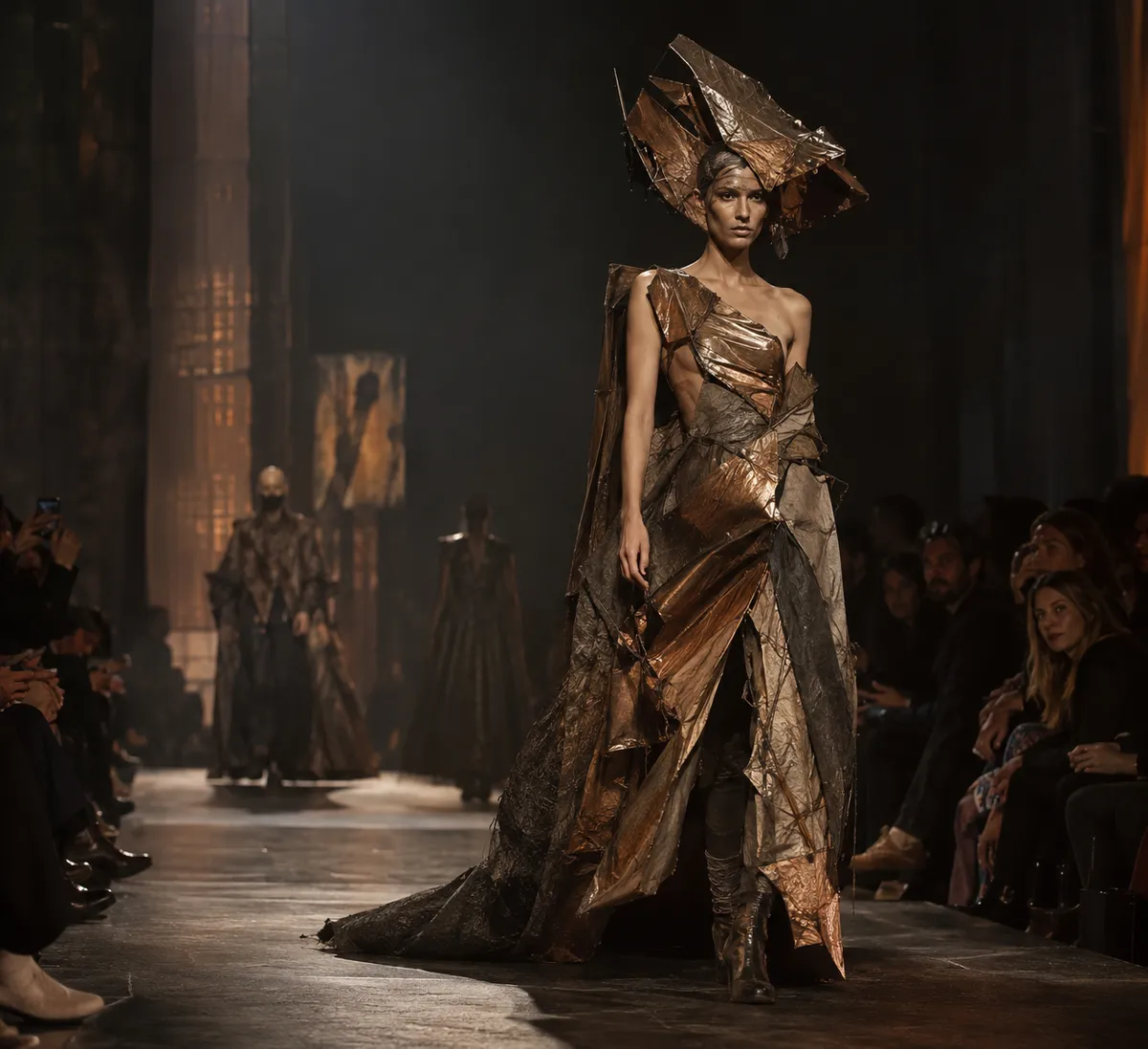
Paris Fashion Week has a reliable cast of headliners: the luxury giants, the heritage houses, the names that sit on the marquee. This season, according to Vanity Fair, the shows people actually couldn't stop talking about came from somewhere else entirely. Matières Fécales, Vaquera, August Barron and Rick Owens, brands at the fringes, drove the conversation, and Vanity Fair argues that some of the best fashion came from them too.
The publication's framing is blunt: Paris now belongs to the freaks. Dior and Chanel, the kind of names that usually own the week, were not where the buzz lived.
What the Fringe Has That the Marquee Doesn't
Per Vanity Fair's reporting, the common thread among these designers is that they prioritize boldness, authenticity and emotional resonance over commercial polish. That is a very different pitch from a runway built to move handbags.
It's worth pausing on the lineup, because it's not a monolith. Matières Fécales, Vaquera and August Barron are labels that operate well outside the heritage-house model. Rick Owens, meanwhile, is the veteran of the group, a designer whose reputation rests on staying strange. Put them in one sentence and you get a week that felt less like a sales event and more like a set of declarations.
Why Now? The Machines Are Coming for Your Wardrobe
Vanity Fair ties the shift to a bigger anxiety: as AI and mass replication commodify fashion, audiences are reportedly craving genuine creative vision and subversive energy over sanitized spectacle.
That reading is plausible, and here's my take on why. If a look can be copied, approximated or generated in seconds, the thing that's scarce becomes the point of view behind it. A polished, safe collection is the easiest kind of thing to replicate. A show with a distinct, slightly uncomfortable personality is not. In that sense, weird isn't just an aesthetic choice. It's a kind of proof of life.
The outlet describes this as a recalibration in what drives industry buzz and consumer loyalty at the highest levels of fashion. Whether that recalibration lasts is a question for future seasons, but this week's chatter points in one direction.
The Rick Owens Blueprint
Of the names on the list, Owens is the one that offers a playbook. His brand sits in an unusual spot: committed to a singular, uncompromising sensibility while still being beloved by celebrities. Those two things are supposed to pull against each other. Usually, popularity sands down the edges.
The lesson fringe labels may be taking from him, and this is my read rather than something Vanity Fair spells out in the material I've seen, is that the edges are the product. You don't earn devotion by smoothing yourself into the background. You earn it by being so specific that the people who love you really love you.
The Paradox of Going Viral While Being Anti-Everything
Then there's Matières Fécales, which presents the most delicious contradiction of the week. A label with an anti-establishment identity, one that by its nature doesn't court the mainstream, became one of the most talked-about names in Paris. That is the paradox in a nutshell: the harder a brand rejects the center, the more the center seems to lean in and watch.
It's hard not to wonder what happens next. Once a subversive label goes viral, the question becomes whether it can keep its subversion intact. Owens suggests it can, though the path is narrow and the track record of fringe-to-fashionable transitions is mixed.
What It Means If You Just Like Clothes
You don't need a front-row seat to benefit from this shift. If the industry's attention is moving toward authenticity and emotional truth, then the trends filtering down over the coming seasons may feel less generic and more personal. That's speculation on my part, not a forecast from the report, but it's a reasonable bet when the loudest rooms in Paris were the strange ones.
The larger point is simple. For years, luxury sold aspiration: be the person who owns the thing everyone recognizes. This week, per Vanity Fair, the energy went to designers selling something closer to conviction. In a market oversaturated with polish, the freak flag may be the only one nobody can knock off.