With October half-term sending families to airports, a travel expert is pointing to a quieter budget-buster than the flight itself: the way you book your parking. Ricky Durrance has shared a few simple checks to run before you reserve a space, as reported by Yahoo. His main takeaway is to understand how your car park charges, plan beyond your flight times, and add only a sensible buffer.
That is the whole sermon, and it is a useful one. Here is how to put it to work.
The Real Trap: Flight Times Are Not Parking Times
Your flight time is the number on your boarding pass. Your parking time is a different number entirely, and per Durrance's advice, the two should not be confused. You park before you fly and you collect your car after you land, which means the clock on your space starts earlier and ends later than the itinerary suggests.
It's hard not to see why this catches people out. Holiday planning revolves around departures and arrivals, so those are the times that stick in your head. The car park, meanwhile, is quietly counting from the moment you drive in until the moment you drive out.
Step One: Find Out How Your Car Park Charges
The first check is the least glamorous: learn the charging method before you book. The coverage points to the difference between calendar-day and 24-hour parking as the thing to understand.
As a plain-language gloss (our framing, not a quote), the distinction works like this:
- 24-hour parking counts time in rolling blocks from when you enter.
- Calendar-day parking counts by the date on the clock, so crossing midnight can matter.
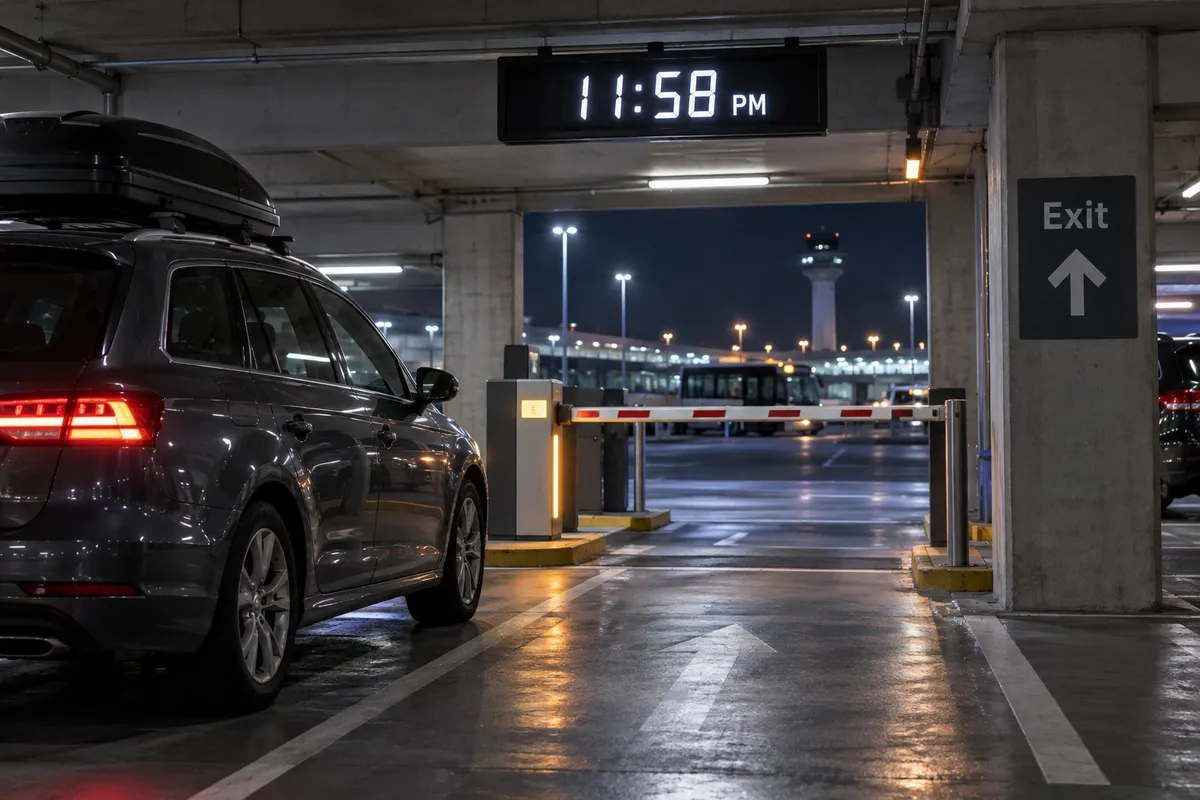
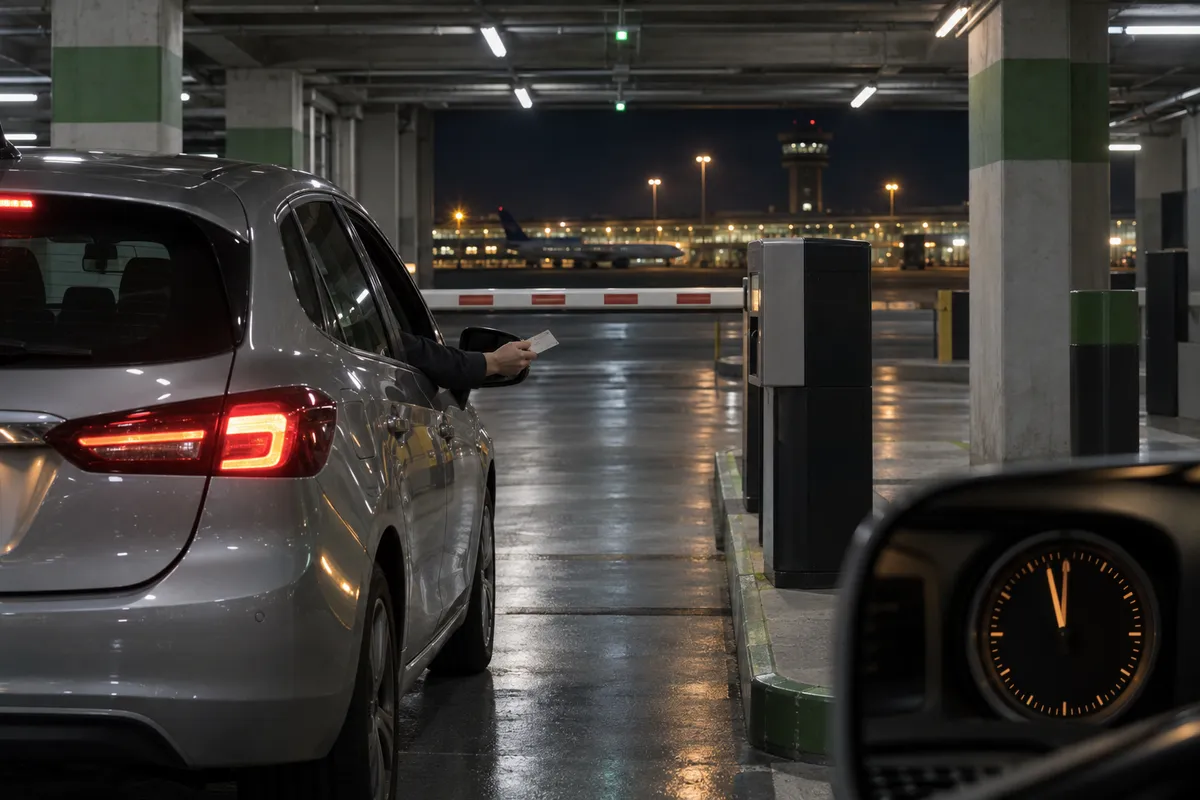
Which one your car park uses changes how a late return plays out. A midnight arrival home is the classic example of where a small delay can turn into a bigger bill, and it's the kind of scenario worth checking against your car park's rules before you pay.
Step Two: Work Out Your Real Entry and Exit Times
Instead of booking from your flight times, build your parking window from the ground up. Think about the practical stages that sit around a flight:
- When you will actually arrive at the car park before departure
- Any shuttle bus transfer between the car park and the terminal
- Your landing time, plus the time it takes to get off the plane, collect bags and travel back to your car
Shuttle buses are the sneaky one. They add minutes at both ends of the trip, and those minutes count toward your stay. Midnight returns, shuttle transfers and grace periods all affect the final bill, so each deserves a line in your sums.
Step Three: Add a Buffer, But Keep It Sensible
Durrance's advice is to add only a sensible buffer, and the word "only" is doing real work there. Too little padding and a delayed flight or slow shuttle tips you into extra charges. Too much and you've paid for hours you never used.
With travel delays still a concern, as the Yahoo report notes, some slack is simply realistic. The goal is a cushion sized to the risks you can actually foresee, not a blanket extra day "just in case."
A Quick Pre-Booking Checklist
Pulling the advice into something you can screenshot:
- Check whether your car park charges by calendar day or by 24-hour period.
- Look up whether there is a grace period, and how long it lasts.
- Add shuttle transfer time to both your arrival and your return.
- Estimate your exit time from your landing time, not just your flight schedule.
- Consider a midnight return and how it would be charged.
- Add a modest buffer for delays, then stop.
The Take
There's something oddly satisfying about this kind of advice. Nobody is asking you to hunt down a secret discount code or master a loyalty scheme. You just read the small print and do some honest arithmetic before you click "book."
It also reframes the problem. The expensive mistake isn't choosing the wrong car park; it's misjudging a few hours, and that misjudgment can reportedly cost you the equivalent of an extra day. That's a lot of money for a rounding error.
So before the half-term rush, spend five minutes on your timings. Your holiday budget will thank you, and the only thing you'll be surprised by at the exit barrier is how uneventful it is.