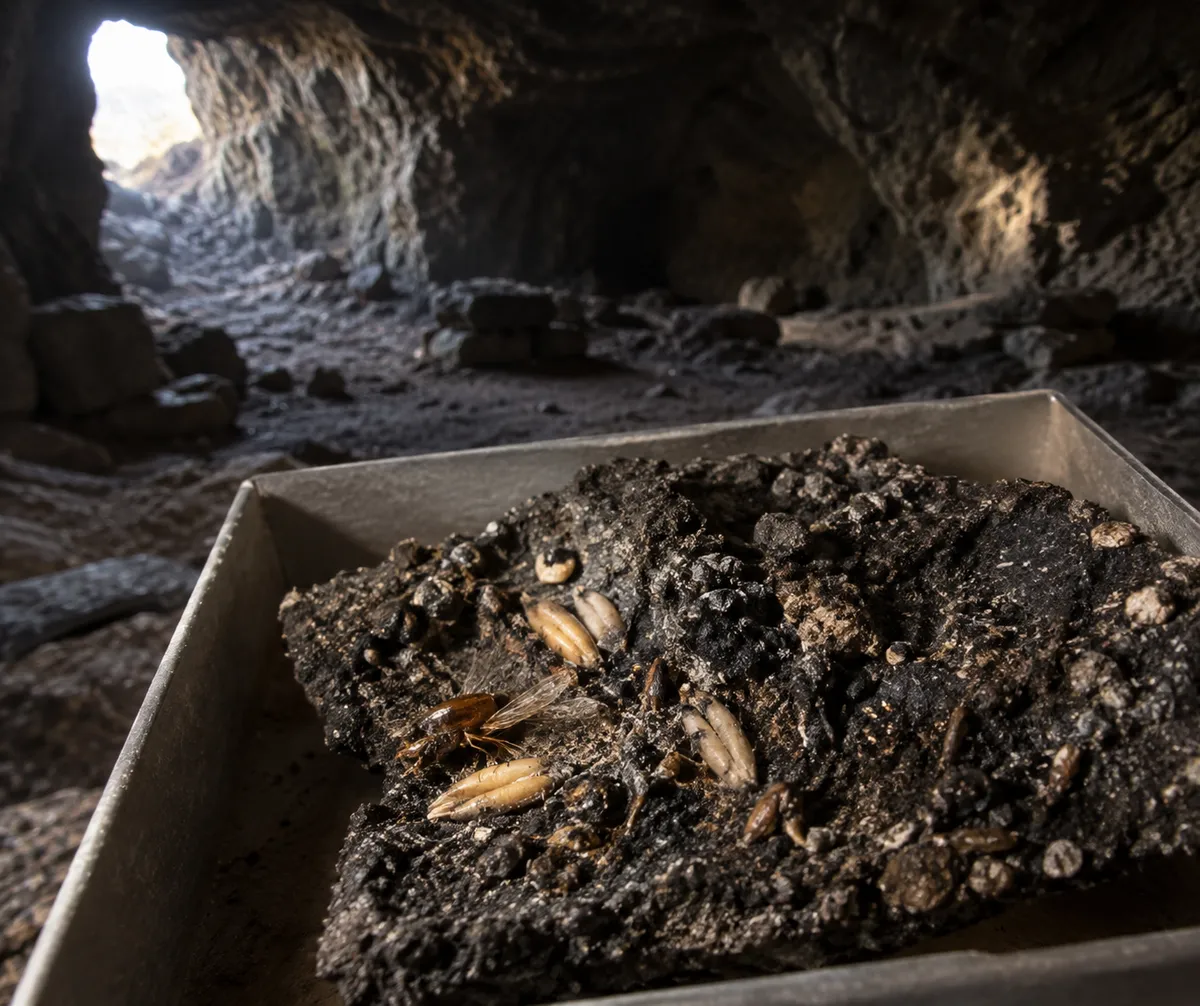
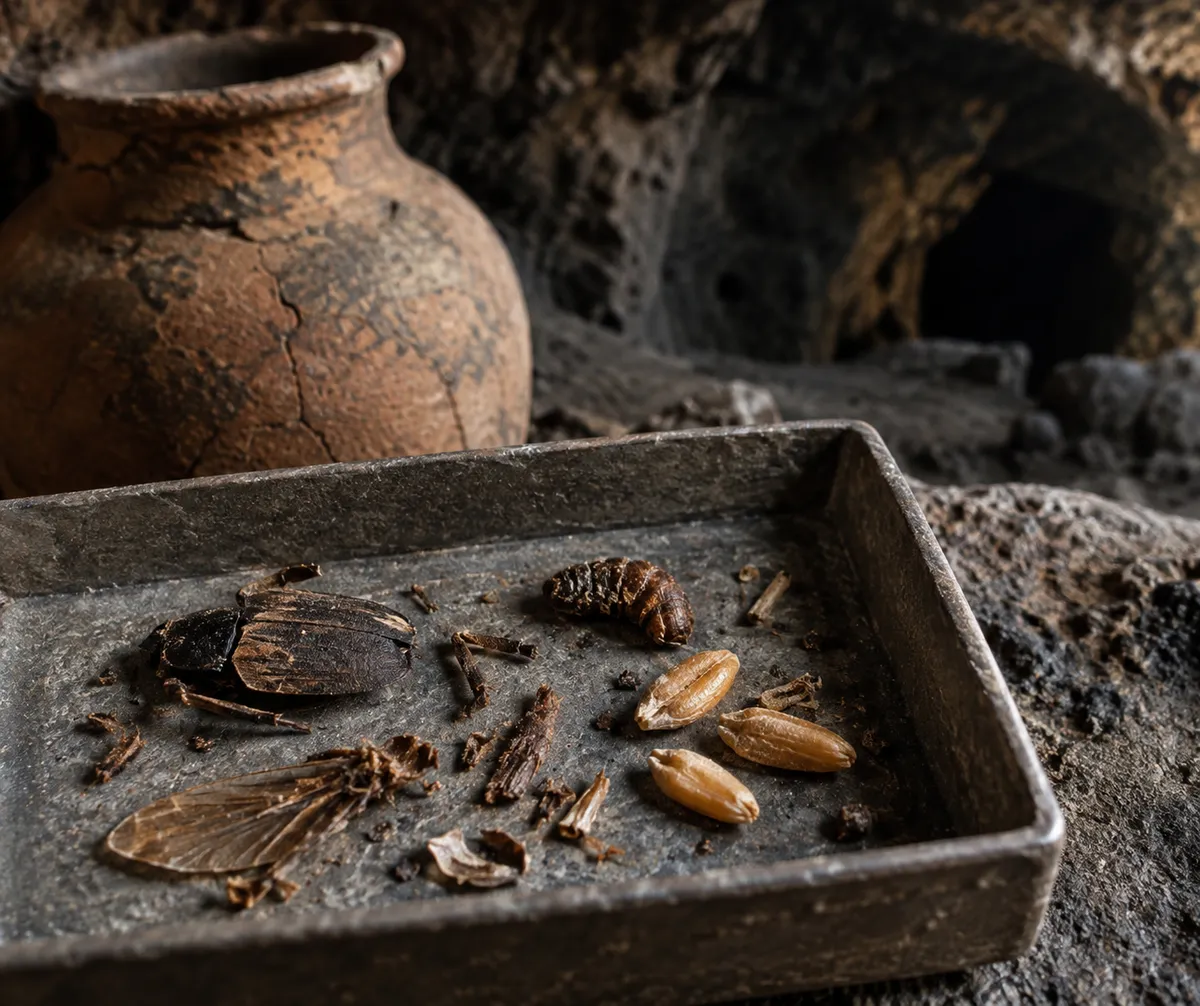
Sometimes the most revealing witnesses at an archaeological site are the ones nobody thought to interview. Per a report from Phys, researchers analyzed more than 8,000 preserved insect remains from the Cruz de la Esquina cave on Gran Canaria and found that the cave had a double life: first as a grain storage site, then as a funerary cave used by the island's Indigenous people.
The cave dates to the 7th to 9th centuries AD. And the bugs, it turns out, had a lot to say.
A Granary Before a Graveyard
The headline finding is a change of purpose. According to the analysis, the insect remains show the cave was used to store grain before it became a burial site. That's a hidden biography of a single space: first a practical pantry, later a place for the dead.
It's hard not to be charmed by the idea that the same cave once held the community's food supply and then its departed. The insects are the link between those two chapters, preserved well enough to let researchers read the sequence.
What the Bugs Say About Death
The second finding is the one that nudges established thinking. The study suggests that bodies were deposited in the cave shortly after death. That challenges earlier ideas about pre-burial decomposition practices, meaning the notion that remains may have been left to decompose elsewhere before being placed in the cave.
Insects are useful here for a grimly logical reason: the species and remains present in a space reflect what was happening in it. Forensic investigators have long relied on that logic, and this work applies the same thinking to a site well over a thousand years old. The researchers' reading, as reported by Phys, is that the timing of deposition was quick.
Meet Archaeoentomology
The field behind this is archaeoentomology, the study of ancient insects. It sounds niche, and it is, but the pitch is simple: insect remains are an overlooked kind of evidence, and overlooked evidence is often where the unscripted truth lives. Bones and artifacts tell you what people chose to leave. Bugs tell you what was going on around them whether anyone intended it or not.
Think of it as the archaeological equivalent of a security camera nobody remembered was running.
Why Gran Canaria's Story Is Hard to Piece Together
The timing of this study matters because Indigenous Canary Islands history was disrupted or lost after the Spanish conquest, per the reporting. That leaves researchers working with fewer written and cultural records than they'd like. In that context, 8,000 tiny fragments become a surprisingly rich archive, adding rare detail about how the island's Indigenous people used their landscape and treated their dead.
The Take
The appealing thing about this discovery is its scale mismatch. Big questions about ritual, death, and daily life got answered not by a dramatic tomb or a golden relic but by remains most people would sweep off a windowsill. It's a reminder that history doesn't only survive in the monuments people meant to leave behind. Sometimes it survives in the stuff that simply happened to be there, waiting for someone patient enough to count it.