In a "day in the life" piece originally reported by AOL and told to Rose Beer, Pilates instructor Bryony Basse walks through her routine: journaling, warm drinks, four Pilates classes a week, two gym sessions, daily meditation, creatine, and a candlelit wind-down. The routine is detailed. The takeaway is almost comically simple.
"I don't believe transformation comes from reinventing yourself," she says. Instead, she argues, it comes from "building trust with yourself through small things you say you will do and then actually do."
In a wellness world that often sells the five-step, seven-gadget, 5am version of self-improvement, that's a refreshingly unglamorous thesis. Here's how the rest of her day backs it up.
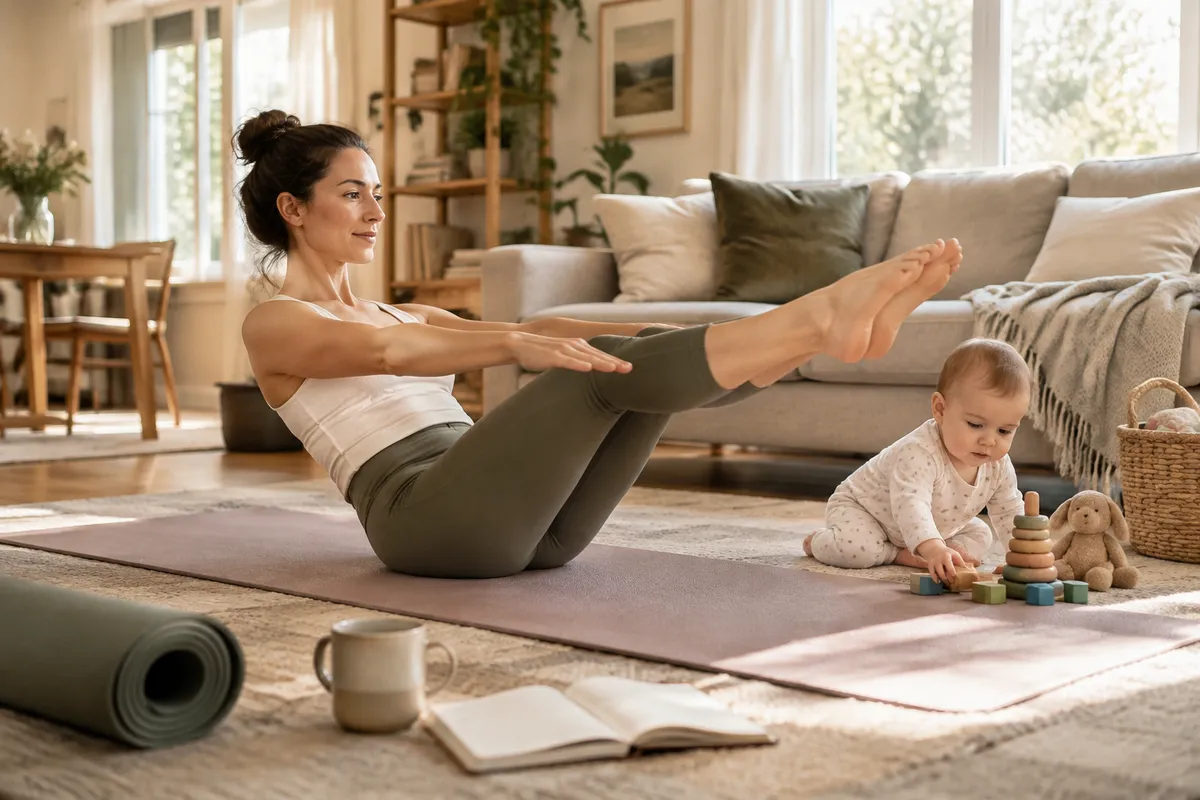
The Routine Is Built Around a Nine-Month-Old
Basse says she wakes between 6am and 7am. She has a nine-month-old baby, so she's "learnt to embrace flexibility." She uses an alarm, keeps her phone away from the bed, and never snoozes.
First up: tongue scraping and brushing her teeth, then something warm to drink. She says she's a fan of Chinese medicine and avoids cold drinks. Most mornings she journals, looking back at the previous day and writing down what she's visualising, plus one thing she'll do for her mind and one for her body.
Notice the scale of that last part. Not a list of ten goals. One for the mind, one for the body. It's hard not to read that as the thesis in miniature: promises small enough to survive a baby's schedule.
Food Without Rules
Basse says she doesn't fast or follow a restrictive diet. At home, she likes eating "quite monotonously" during the day because it removes some decision-making, and then she's more flexible at dinner. She doesn't believe in foods being "off limits," and she has dark chocolate every day.
That's a quietly practical idea. Fewer choices at lunch, more room for fun at dinner. It's a rule that exists to reduce rules.
Pilates Plus Weights, Not Pilates Versus Weights
Her movement, she says, is "quite scheduled" because she's fitting it around a baby and running a business: four Pilates by Bryony classes a week and two weight-training sessions in the gym.
She calls movement her number-one tool for managing stress and mental fatigue. "If I'm very in my head, getting into my body changes my state incredibly quickly," she says. Pilates, in her telling, gives her strength, control, mobility and mind-body connection, while gym sessions let her work with heavier loads.
The pairing is the interesting bit. An instructor whose brand is Pilates still lifts heavy things on purpose, and says why. It's a nice counter to the tribal "my workout is the only workout" energy of fitness social media.
Recovery on a Budget
Basse says she loves saunas and cold water, but doesn't think recovery has to involve lots of expensive tools. Her foundations: walking, sleep, gentle movement and a proper rest day. She also loves sea swimming when she can, saying cold water makes her feel mentally clear.
She also mentions a few more curious-minded habits:
- She recently did a DUTCH hormone test to understand how her energy and mood shift across her cycle, which has made her more curious about recognising patterns.
- She takes five grams of creatine daily, initially for strength and recovery, noting there's "emerging research" around creatine and cognitive function too.
- She meditates daily and is especially interested in visualisation, which she uses as mental rehearsal. If something coming up makes her nervous, she mentally walks through it beforehand.
None of these are presented as magic. They read more like a person following her own curiosity, which is a different thing from chasing a trend.
Blue Zones and the Boring Fundamentals
Basse says she's fascinated by research on the Blue Zones, the regions long associated with healthy ageing. Her reading of it: "Wellness can become complicated and commercialised, but many of the fundamentals associated with healthy ageing are remarkably simple: movement, food, purpose, connection and a sense of belonging."
That's the quiet irony of the whole piece. Her routine includes a hormone test, creatine, saunas and a tongue scraper, yet her stated philosophy is that the basics do the heavy lifting. Whether you read that as contradiction or balance is up to you, but she's at least upfront that the extras aren't the foundation.
Winding Down Like It Matters
Basse says she starts winding down around 10pm and tries to fall asleep soon after. The household dims the lights, lights candles and puts on a calming playlist. She might have mint tea and read. She tries to stay off her phone for 30 to 60 minutes before bed, and takes magnesium.
It's a bookend to the morning: phone away from the bed at 6am, phone away from her face by 10pm.
The Actual Takeaway: Make the Promise Smaller
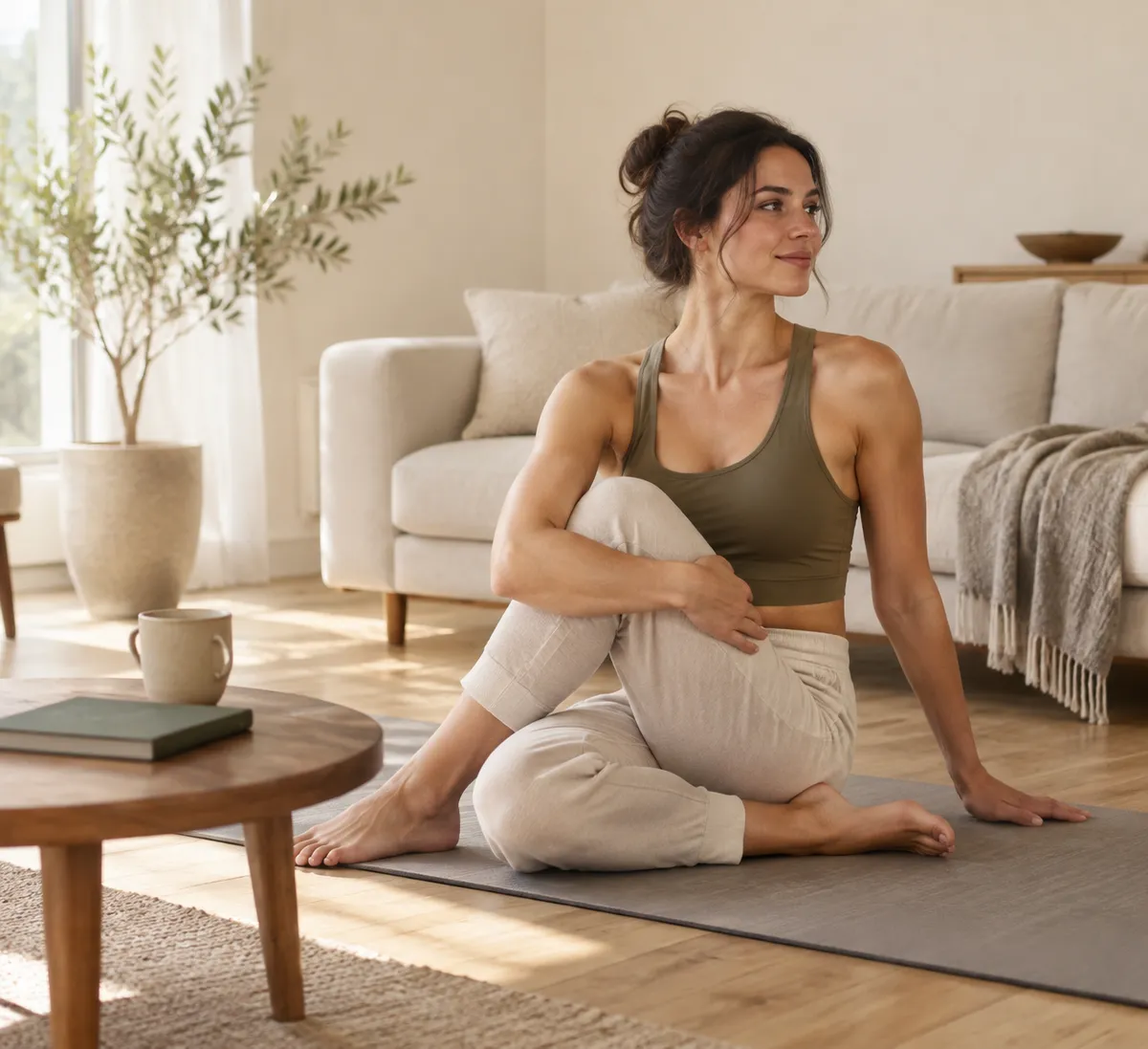
Here's the part worth screenshotting. Basse says most people don't need a complete life overhaul. "They need one or two promises to themselves that are small enough to keep." Her examples: 10 minutes of Pilates in your pyjamas before work, or putting your phone away for the first 20 minutes of the morning.
Then comes the logic: once you trust yourself to do it, build from there. "Consistency builds evidence, and that evidence builds self-belief."
That framing is the smart part. It treats a habit less as a discipline test and more as a trust exercise. Skip the grand reinvention, keep a tiny promise, and let the receipts pile up. It's a pleasingly low-drama way to think about self-improvement, and one that a person with a nine-month-old, a business, and a gym schedule apparently finds workable.
For anyone eyeing a dramatic fresh start this autumn, the more radical move might be picking something so small it feels almost silly. Then doing it tomorrow, too.